|
Welcome back to Thank God It’s Monday!
tl;dr Everything has a tradeoff. We constantly weigh short and long-term sacrifice and gain. Being able to hold both in perspective will help us live a life we love, balanced with sound preparation for the life we want to live. How well do you keep both under consideration?
If we knew we only had a couple of weeks left on earth, we might blow our savings, go on our dream vacation, eat all of the food we know is bad for us, and speak to everyone with unfiltered truth. We could act on all of those impulses without regard for future consequences.
On the other hand, if we knew with certainty we were all going to live until 90+ years old, (likely) without social security, and we could visualize on a graph how our habits would affect our future quality of life, we’d probably also make different decisions. We might budget more cautiously, eat better, and train more diligently if we could see how these choices play out down the road.
Humans are unique in their ability to consider complex, distant, and non-existent future situations. There are numerous examples of other animals anticipating some future events (squirrels storing food, apes making tools, pets eager for routine). But we can synthesize possibilities that don’t yet exist and act upon them now. We may skip the next vacation upgrade to ensure our retirement funds are adequately funded. Or we may take a day to rest on the couch because we know the coming week is going to be exhausting.
However, I think our biggest frustrations in life come when we are not well-balanced in our past and future investments.
Consider when you feel frustrated with a current job. You may be unhappy with your current level of fulfillment or reimbursement. But you may stay because you’re invested in their pension plan, have seniority, and are ingrained in their culture. You sacrifice current discomfort for future “certainty.”
Or you might think about how you keep swearing this is the year you’re going to improve your nutrition and exercise. You know your blood work could use improvement, you would love to feel better in your own skin, and it would help your quality of life. But you somehow find yourself slipping into old routines before you know it, frustrated and confused about why you can’t seem to change. You’re simply prioritizing current comfort at the expense of uncertain, future discomfort.
So how can we better utilize these unique abilities of humans to better balance our current and future selves?
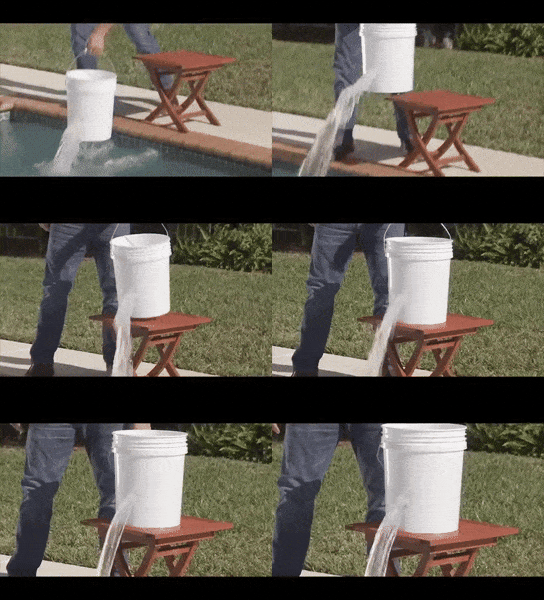
When you’re feeling dissonance, whether that’s with a job or personal habits, take note of how much weight you’re putting in your short and long-term buckets. If you are dumping resources into one heavily over the other, it may be the root of the issue. Figure out how you can better distribute the benefits for your short and long-term gain, and you may find it ameliorates some of the dissonance.
With the example of your habits, are there some small sacrifices you’re willing to make for your future health? Maybe that doesn’t mean doing a huge overhaul of all of your food, exercise, sleep, and hydration. But maybe that starts with small changes like walking a bit more or decreasing the amount of takeout. Something that doesn’t feel like a huge challenge but will contribute to a positive outcome over time.
It’s not easy, and it might not seem worth it to you, juggling all of this. And that’s a personal decision; there’s no right or wrong here. But my argument is if you want to get more out of your life now AND in the future (because none of us can predict what’s going to happen), then we have to figure out how to allocate our resources to support both.
If you found some value in this, please share it with a friend you think would enjoy it! And let me know if you’d like to be added to get TGIM.
This week, my podcast recommendation is from Lewis Homes’ School of Greatness, “Stop Limiting Yourself: How Your Beliefs Become Your Biology with Nir Ryal.”
With that, Happy St. Patrick’s Day!
Until next time,
Shannon
|


View comments
+ Leave a comment